Photo credit: Ethan Pines
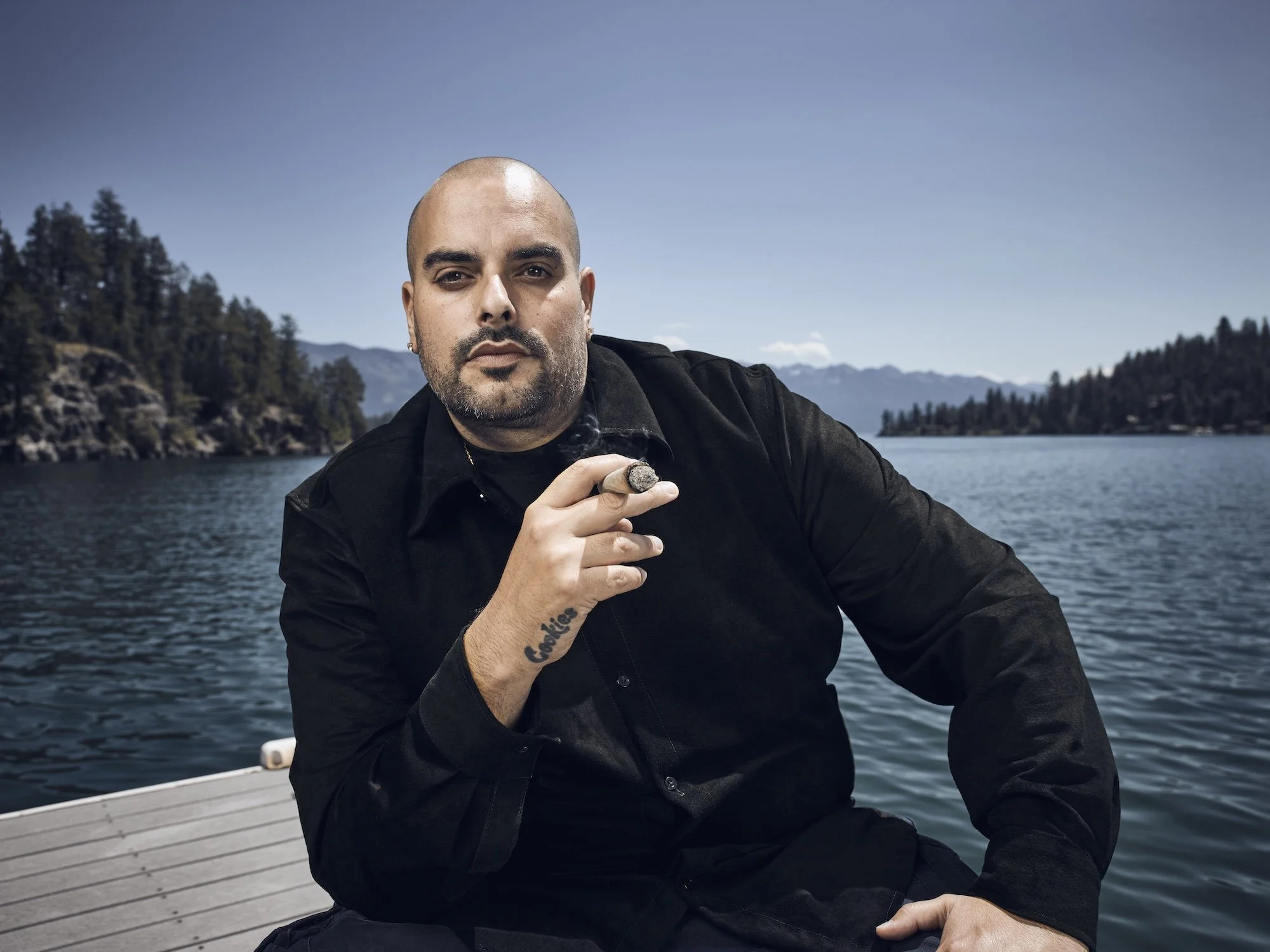
2026 began with its usually bang. Many renewed their commitment to betting on themselves, following their dreams, and building their business into something that leaves a lasting impact. After following his dreams led to building a billion-dollar business, music artist, cannabis entrepreneur, and Cookies co-founder/CEO, Berner is ready to share his story, with hopes of helping fellow entrepreneurs reach new levels of success.
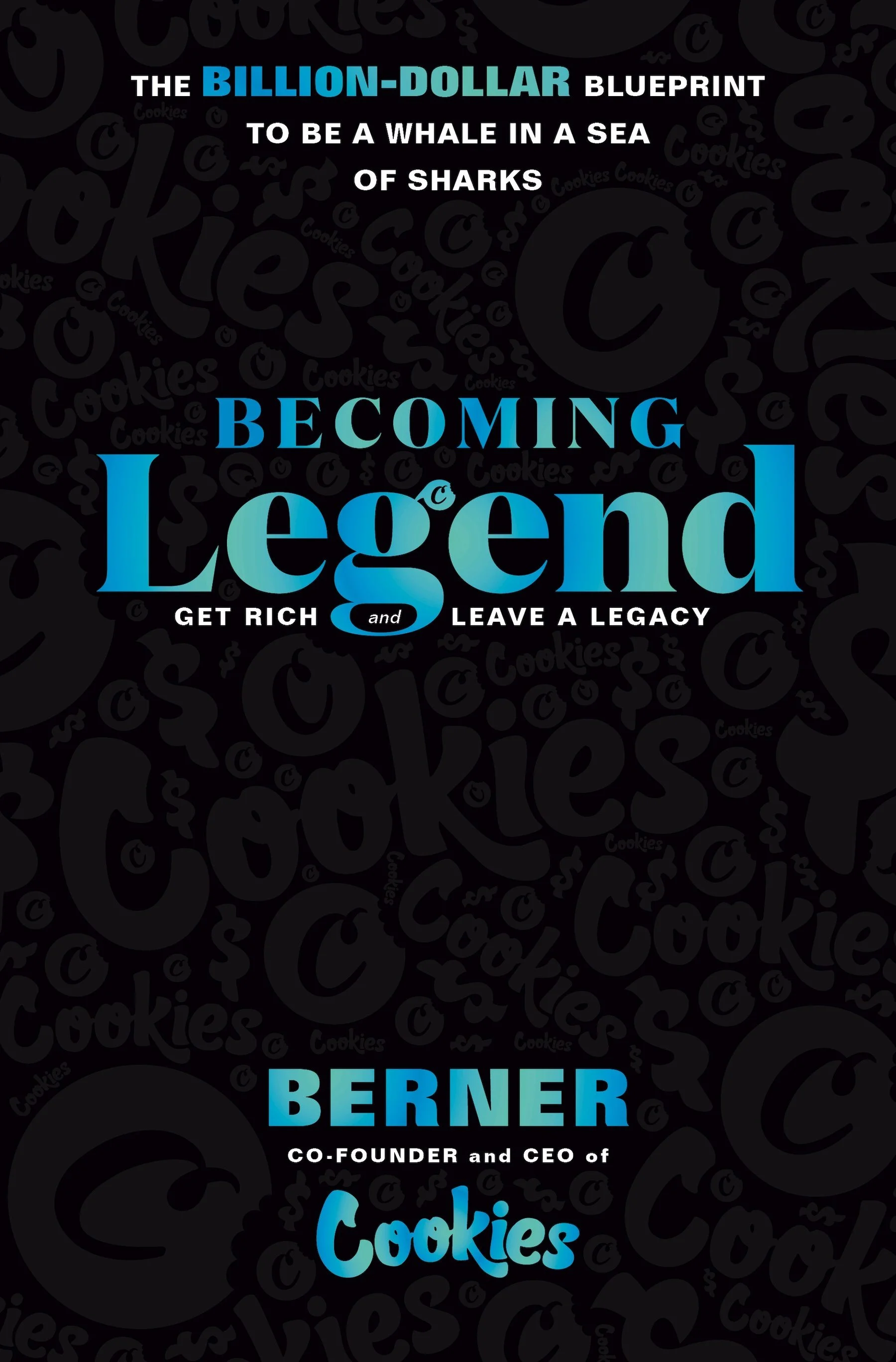
His new book, BECOMING LEGEND: The Billion-Dollar Blueprint to Be a Whale in a Sea of Sharks finds Berner diving deep into insights he’s uncovered over the years that helped him grow Cookies into the most recognizable brands in the legal cannabis industry.
In this exclusive interview, Berner shares thoughts about entrepreneurship, building a brand, and the synergy he found between Hip Hop, streetwear, and cannabis. He also touches on fundamental philosophies, like “put your fingerprints on everything”, the power of following your intuition, and of course, what gets him Hype Off Life. Tap in below. Then, pick up a copy of BECOMING LEGEND for some next level knowledge.
We're about 2 months into the new year and you have a lot of dope things lined up, including the release of your new book, BECOMING LEGEND. What about its release has you most excited?
I'm excited to be able to talk about some of the things we've been going through in the background as a company, as a brand. A lot of people don't really know what we're dealing with that I haven't been able to speak about publicly. So, I'm excited.
The book explores your journey in entrepreneurship. More specifically, growing Cookies into a billion-dollar mainstream brand. Why do you feel now is a good time to tell your story?
I feel like people have been on a journey with me for a long time. I've been doing music for 20 years. So, fans have been riding me for 20 years, and they've seen the brand grow organically from where it started to where it is. I feel like now is the perfect time to share our story.
The first chapter of the book is about vision. What was your initial vision for Cookies when you first started?
To be the first actual brand in cannabis. I used to work at a dispensary, and no one ever had any branding, no logos, or colorways. So, I'm like, I want to be that.
You've been able to connect the dots between Hip Hop, streetwear, and cannabis, which some of the best businessmen have been able to do. Why was that a no-brainer for you?
I feel like they all go together. Music is like clothing. Music and herb, it's all part of a culture. It's just hard to describe, but they all kind of go together and one promotes the other. So, I feel like the music was keeping the weed lit and the weed was keeping the music lit. And the clothing was a great way to let people buy into both of them and be a billboard for us. I feel like it's all a great combination of things that complement each other.
Your book has a chapter on learning the rules before you break them. What's a fundamental business rule you've learned over the years?
It's follow your gut. In business, you can make a decision, it could be right, it could be wrong, but your gut is always going to be your best decision maker.
Which was the hardest to reach, your first $100,000 or your first $1,000,000?
First $100,000 was really hard to do. It was really hard to get to because you're young and trying to figure it out. Once you get to your first $100,000, it feels like the million is going to be definitely a possible goal.
What are some challenges you've had to face being in a highly regulated industry, like cannabis?
Everything. Having to re-design packaging non-stop for different markets, having to figure out how to cultivate your product in different markets or different standards and different rules, and just actually having to adapt to the recreational market when you come from the black market or the medical market. The worlds have been so strict, and they change all the time.
How did you find the resources and help to help you overcome those challenges, especially since you were such an early player?
I just used my resources around me. I networked. I got into rooms and tried to find people that are good at what they do, whether it be compliance or business strategy or retail, whatever it may be. So, I just networked as hard as I could.
Speaking of networking, what other role has it played in your success?
Networking? Just opening up many doors for me. That's how I got into clothing, and that's how I got into food products, and just got into film and television. When you go out and you start conversating with people and you get to meet people, you take their phone numbers, you start to have conversations, you start to figure out who's who and what they can bring to the table, [and what] we could bring to the table for them. So, networking is everything. Your Rolodex is almost like your credit card. Who do you know and what could you guys do for each other.
You had the foresight to see cannabis was going to take off in a major way. Describe the moment when you knew it was the right time to enter the market.
I've been doing this for over 20 years now. I think it's almost close to 24 years now. So, you have to think I was doing this when I was 18 in the medical space and I would see people come in that would be doctors, off-duty cops, teachers, just regular people. I was like, everyone loves cannabis. And I think it's going to be something that people enjoy all around the world, which obviously they do now. They have been for many years. So, I feel like being in California during the Prop 215 days really got me excited about just entering the space in when I was 18. When I saw things start to become legal, I just knew I had to get in.
That's a very cool story because you know a lot of people, you just have to take advantage of the opportunities when you see them ahead of time.
Yeah, you have to try to enter while it happens. So, as Colorado opens up, as California opened up, as other markets, even other countries open up, we try to be first in line [to] plant our flag.
BECOMING LEGEND also touches on the time-tested wisdom of all money isn't good money. What are some deals you turned down that would've been an easy call for others?
There was a deal that I talk about a lot where it was $800 million for the brand to acquire the brand. A lot of people hear that number like, "Why didn't you take it? " But. when you understand the deal and it was $30 million cash and the rest is stock and the stock is down, worth zero. And I kind of knew that would be.
So, I think a lot of people in the early days would've taken that money that would've been juiced to get $30 million and some stock. They would've thought it was going to be easy to sell. That was a big one.
Then there are other deals from other celebrities and whatnot that were just positioned to me. I feel like I've been able to navigate through things pretty well. But, mostly the biggest deals I turned down that would've been a no-brainer for people were acquisition opportunities.
If people haven't guessed it by now, you're very big on longevity and leaving a legacy. What's the hardest part for you about building a relevant, timely, and timeless brand?
Just to stay persistent, stay consistent, and stay in front of the camera. Stay in front of people so much. I've been doing this and music at least for 20 years, cannabis for almost 25 years. I'm not going to lie, I'm tired. So, to leave a legacy, you have to keep putting your work in. I don't think I could slow down, ever. Sometimes it's a little tough on the mind. Having to stay relevant for so long is not easy either.
You have a chapter in BECOMING LEGEND titled “Put Your Fingerprints on Everything”. Can you elaborate on that and explain why it deserves a whole chapter?
Yeah, because I feel like a lot of people put people in position to do things for them, which is obviously going to have to happen when you have a lot going on. But, the more you can actually touch things yourself, whether it be relationships or marketing, branding, or rollouts and introductions to new markets, whatever it may be, if you're touching it personally, you have your personality, you have your vision on it, and there are less mistakes that can happen.
I feel like when you delegate things and you give things to a bunch of different people a lot of things can go wrong. So, I try to be as present as possible. Even right now, I'm like, "Yo, you got this Zoom ready for two o'clock. I'm on my sh*t, right." And so, when you're on your shi*t, then things don't really fall through the cracks. So, for young entrepreneurs out there and people trying to build a brand, people want to respect their leader. The more present you are, the more respect you'll have.
I agree with you on that. And I appreciate you for being on time for the interview.
I'm never late. I'm always early.
You’ve done a lot since you first got started. What's been the most rewarding part of it all?
To touch a whole world through the brand. To see people in China, Thailand, Germany, Scotland, Netherlands, and Spain, you name it. The whole world knows what Cookies is, at least certain pockets of it. And I think that's cool. Just being a kid that had a dream, to be able to touch the whole world through your work is the life goal on its own.
BECOMING LEGEND leaves a legacy in a sense by passing down the wisdom you've unlocked over the years. What's the main point you want readers to take away after they finish the book?
That it takes passion to get things done like this. It's not just all about who you know. It's not about having capital behind you. If you're passionate about what you do, you can actually reach what we've reached and what I reached with the brand, and that just it's a lot more behind the scenes than people know. That's the biggest thing I want people to know. Like, "Yo, you might know Cookies for what it is, but you don't even know what I went through to get here." I just really want to break it down for people that might have problems while trying to build their brand or business.
What gets you Hype Off Life?
My children. I look at my daughter right now, she's 18, she's in college, and she's crushing it. I get excited about that. My son is two years old, my daughter is nine months old, and I have another baby coming in July. So, I'm like, yo, I got to stick around. I have to stay on top of my health and just make sure I keep grinding for them. So, that's what gets me Hype Off Life right now, my kids.